
What’s missing in the pictures below?
Pic 1
Pic 2
Pic 3
Mulch!
So, why mulch?
Well, there are many benefits to using mulch: reduces weeds, improves nutrient retention and minimizes/eliminates fertilization, improves soil water storage and reduces irrigation, etc. But, here are the big three reasons you MUST MULCH when planting trees into a lawn.
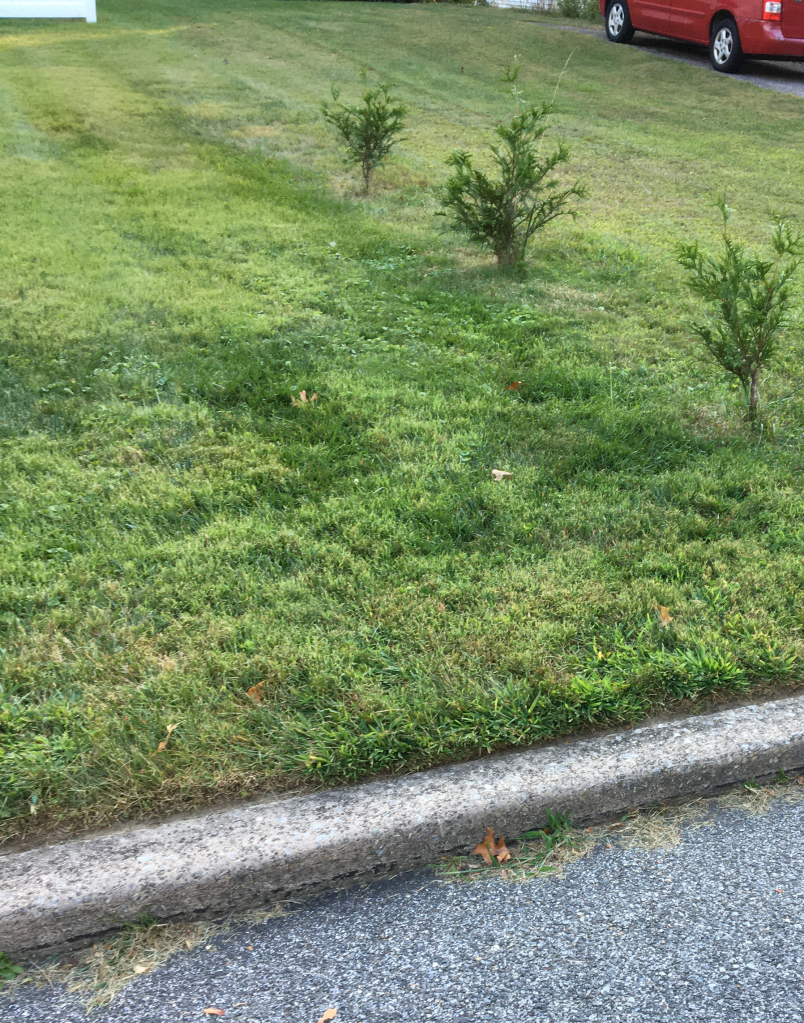
- As you can see in Pic 1, when planting small woody plants in a lawn, grass growing right next to the plants will be growing as tall or taller. This reduces nutrient uptake by your woody plant, slows growth and makes growing to maturity much l-o-n-g-e-r. Also, when you weedwhack around the young tree, you can potentially nick the bark and kill it (see the bare yellow spots in the back of the tree row? Those were former little trees). Ouch! Mulching helps to keep weeds/ grass from growing while eliminating the need to weedwhack up to the tree, giving it the best chance of survival.
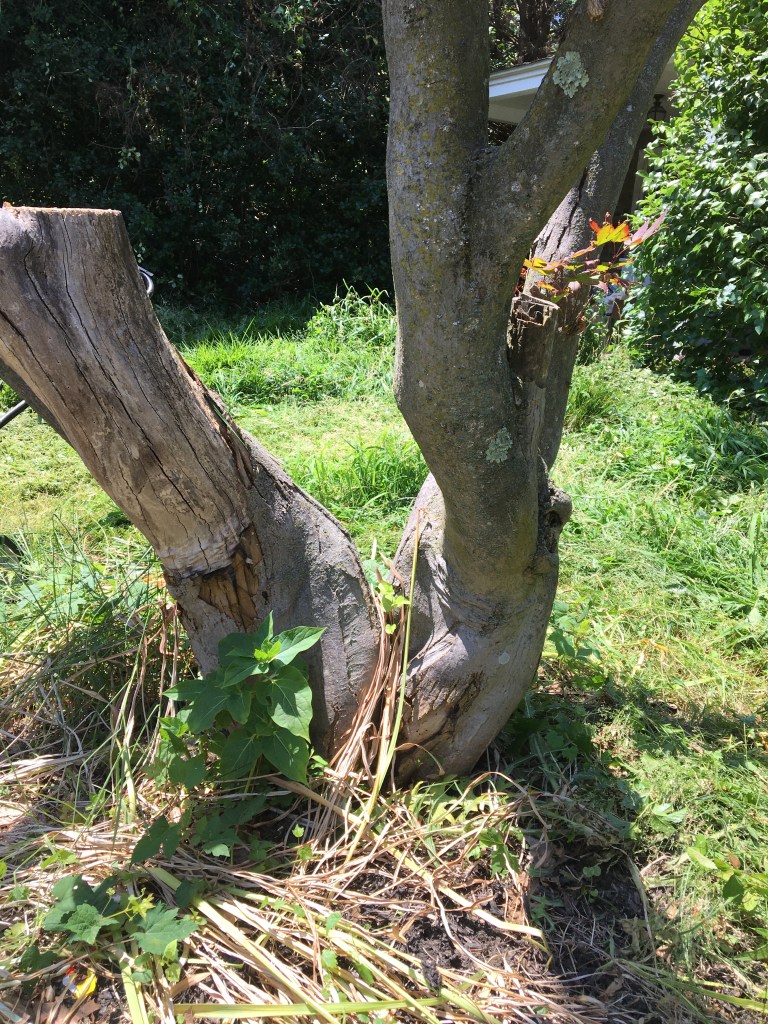
- As you can see in Pic 2, when a tree matures and you weedwhack around the tree, if there is no mulch, most landscapers will end up weedwhacking the tree. For many if not most tree species, such as this Japanese maple, weedwhacking leads to bark removal and opens up a wound (trees are like people!). Wounds can be infected with fungal or bacterial pathogens and, as you can see, lead to gradual tree death. So, by mulching around the base of the tree, you eliminate the need to weedwhack up to the tree. Thus, you save the cost of THE TREE already growing there, removing the DEAD TREE and potentially planting a NEW TREE!
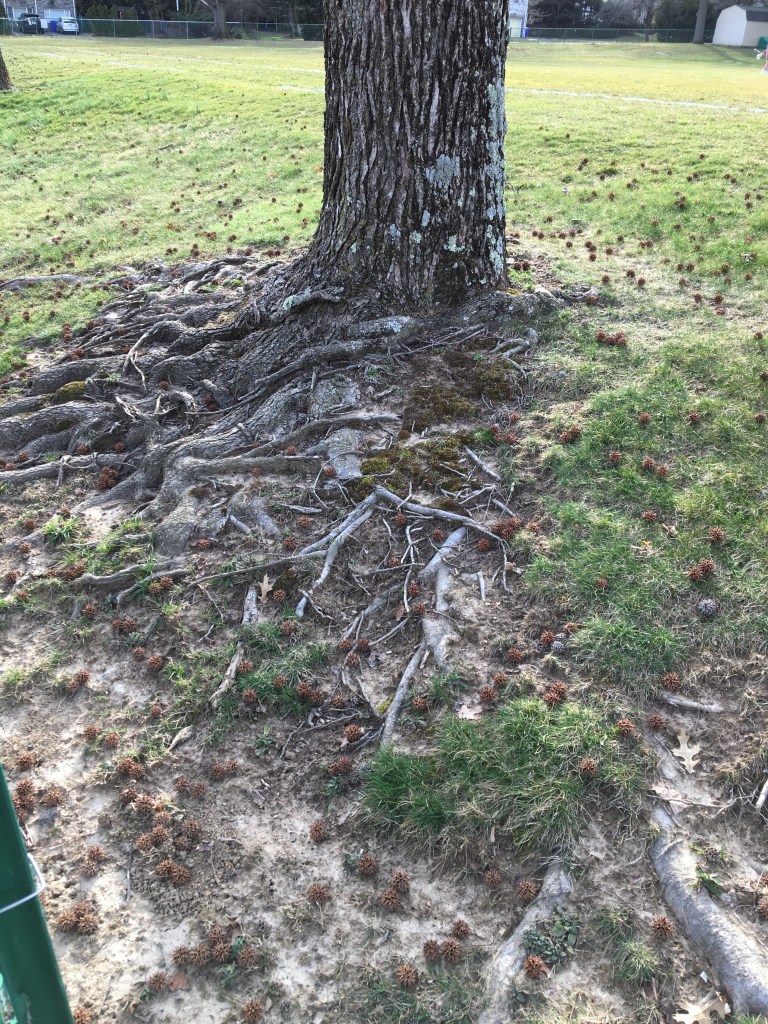
- As you can see in Pic 3, many tree species grow such that their shallow roots emerge above the soil. In flat sites, it is not so much of an issue, but on sloped sites, erosion can ensue. More importantly, exposed roots are often mowed over, potentially leading to damaged roots and damaged mowers. Damaging roots over time can lead to a scenario as with damaged bark. So, once again, mulching helps to SAVE YOUR TREES!
Why don’t people mulch? I have no idea. Given the annual cost of lawnmowing services, applying mulch once a year is a small fraction, but I suppose that many think that it’s an unnecessary expense. But, when you factor in improved root stabilization of woody perennials that decreases fall risks, reduced disease and pest infestation and even greater water retention in surrounding soil, thus reducing irrigation needs in the summer, mulching around perennials can save money long-term.
So, how do you mulch properly? Well, any organic matter will do, and wood chips and shredded leaves are free for the taking. However, most people are going to opt for shredded bark mulch, either brown (natural color) or black (dyed with carbon black). And this is fine. But, I will give you a secret that saves you money over the course of a season without compromising “looks”: use undecomposed organic matter. For example putting down 1-1.5″ of wood chips, sawdust or shredded leaves, then covering with 1-1.5″ of bark mulch colored to your preferences balances both worlds. You get the nice finished look on top while below you get the best kind of mulching. Some might argue that undecomposed, high carbohydrate organic matter such as wood chips and saw dust are undesirable because they tie up nutrients, but when you’re dealing with wood perennials, their roots are growing deeper as they grow! So, by having undecomposed organic matter on the surface, you gain the smothering effect of organic mulch plus the nutrient limitation at the surface. As the season progresses, you can gradually add compost tea if so desired, but most wood plants are going to keep doing what they do: grow deeper. And when you look at a forest, most trees are growing in leaf and dead branch litter. And who can argue with nature?
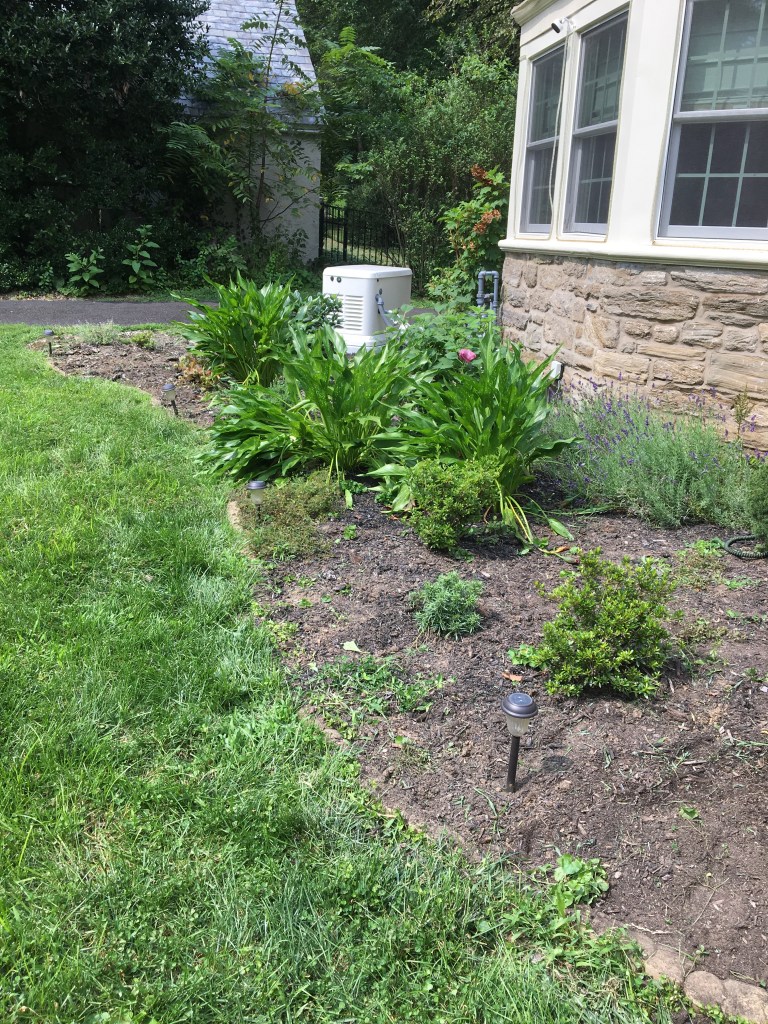
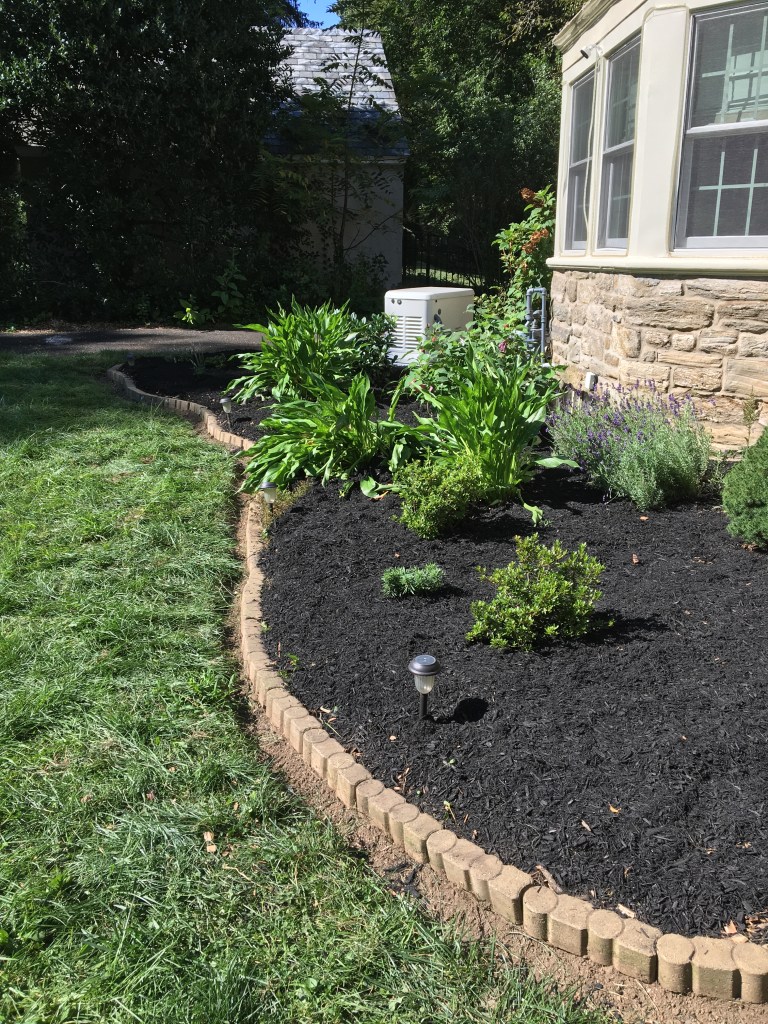
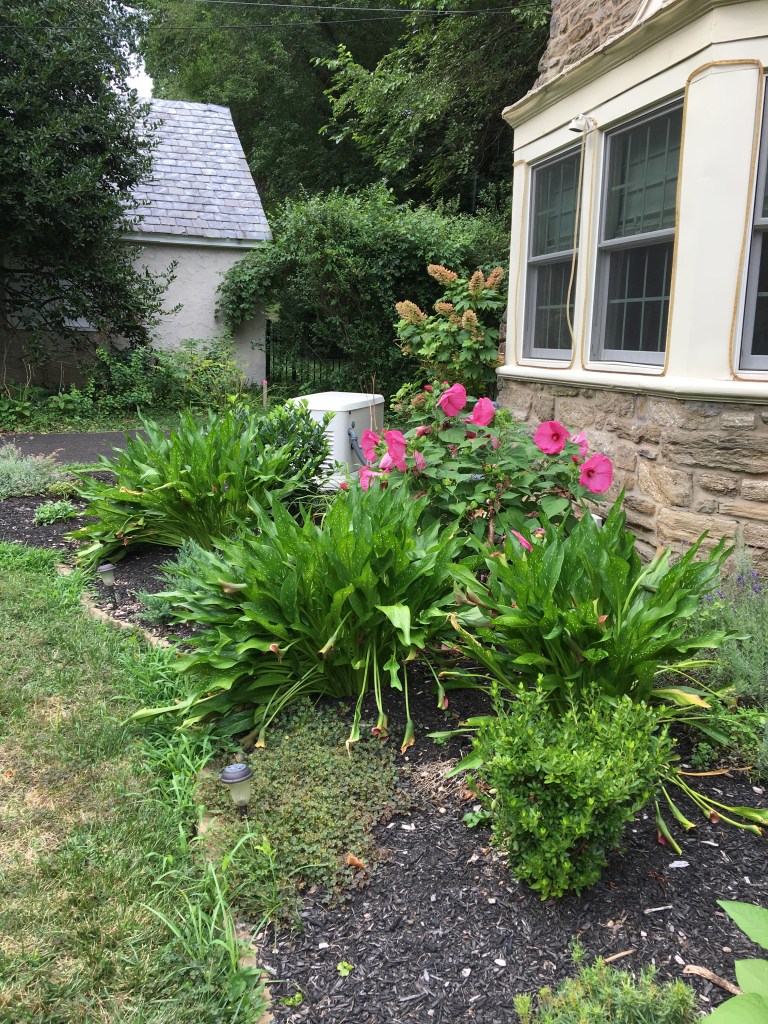
Below is a pic of a garden that I weeded, planted and mulched over the course of two seasons. Pic 1 is before weeding and mulching. Pic 2 is after laying down woodchips and then bark mulch (you can see the woodchips peaking out at the edges!). Pic 3 is one year later (last year) before a light weeding. It was light because there were hardly any weeds (just a bunch of wood sorrel in the front)!
Pic 1
Pic 2
Pic 3
Hopefully, you have relaxed your anti-mulch stance and embraced the power of a bit of mulch. Whether you are redesigning a bed, planting a hedgerow or mulching to the dripline of a tree, mulch is a valuable tool to your ecologically-logical landscape arsenal. Thanks for visiting and if you have any questions or are interested in discussing your mulch and landscape makeover, feel free to reach out!
 ECOworks llc