
There are two main camps in the leaf cleanup world.
Camp one is the leaf eradicators. Such folks want every speck of tree debris removed from their property by late Autumn. If the municipality offers leaf cleanup, this seems like a sensible use of one’s taxes: either bag or pile leaves by the curb and…WOOSH! They disappear (eventually).
The benefits of leaf removal are that, if one is paying taxes already, you might as well take advantage of the payment! Secondarily, municipalities that collect leaves almost always combine these leaves into municipal mulch production, providing a valuable outlet should one wish to reapply this mulch to one’s beds.
There are several problems to this approach, however:
- Leaf cleanup is time and energy consuming. It requires extensive raking (great exercise!) or blowing the leaves. Most commercial operations will use gas-powered backpack blowers. Beyond the emissions associated with gas-powered equipment, these devices are generally viewed as a noisy nuisance while operating.
- While some homeowners diligently bag leaves for collection, many homeowners will pile the leaves by the curb. If this is done well in advance of the date of leaf cleanup, rain and windstorms can wash a substantial quantity of leaves from the original leaf pile. These leaves enter streets and sidewalks, creating potential trip or slip hazards while potentially clogging storm drains.
- While municipal mulching is a great idea, users of said mulch often find that the finished product often contains trash and weed seeds. Thus, if you apply the mulch, you can potentially create more problems than you originally had!
- Some homeowners, notably in areas with irregular or no leaf cleanup, will bag leaves in single-use plastic bags destined for a landfill. This not only removes a valuable horticultural material, but simply adds to the growing waste problem.
Camp two proposes to leave the leaves! This is a fairly straightforward approach. Simply move leaves to a designated bed or patch of property where they can sit and…break down slowly.
There are several benefits to this approach:
- Rather than spend the time, energy and money using equipment to move leaves from one side of the property to a common point, leaves can be quickly moved to a site near the original leaf fall, whether under the original tree or in an adjacent bed.
- Leaves also provide a valuable source of fertilizer as they break down, thus nourishing the plants where they are located. In addition to fertilizing plants, they can also suppress weed growth where they are piled to a sufficient depth and compacted sufficiently.
- Leaves provide valuable habitat for many native, ground-dwelling insects (which naturally burrow into leaves during the winter). This habitat can also potentially accommodate other native vertebrates and invertebrates, such as reptiles and toads, thus increasing habitat in sensitive areas.
However, there are drawbacks to this method.
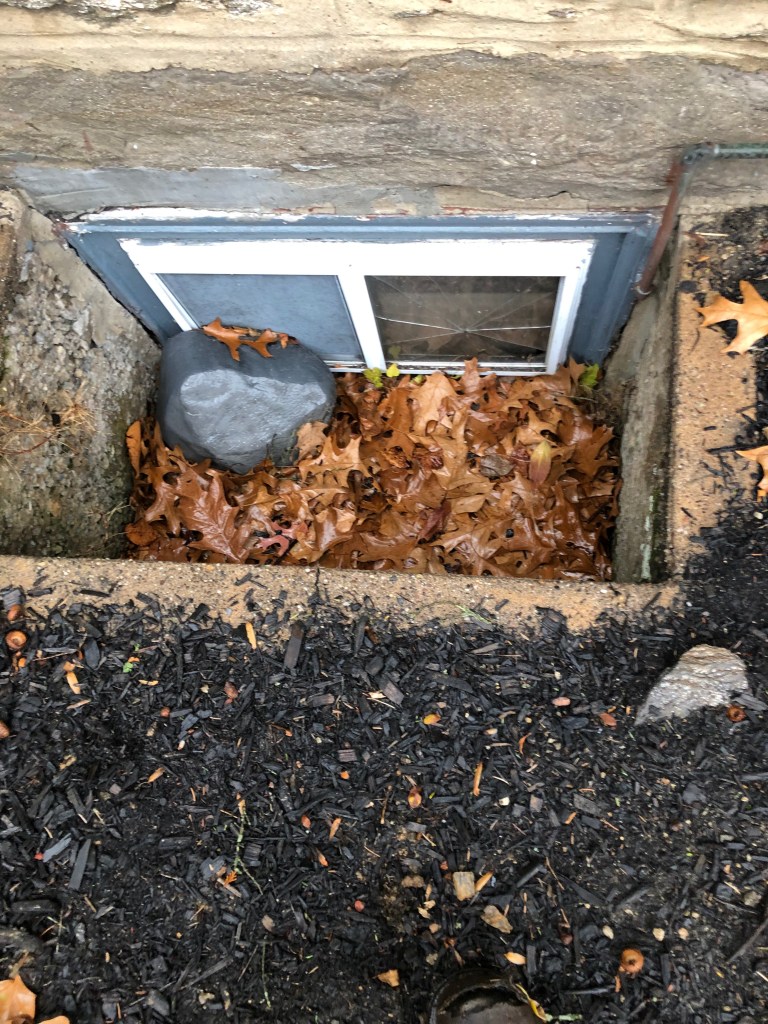
- Smaller leaves, such as from black locust, cherry or birch trees, will more easily compact and stay in one place. Larger leaves, such as from maples, oaks and sycamores, are perfectly designed to go with the windflow. Thus a pile of leaves on one side of your property can easily disperse to another, accumulating in window wells, on decks and furniture or other locations. While providing habitat is great, providing mouse/rat habitat next to a house is not so desired! Likewise, if leaves are left to be in front yards, they can end up on sidewalks, streets or storm drains.
- Some trees produce abundant quantities of leaves given their large canopy. A perfect example is a mature oak tree. Unless there is sufficient bed space to accommodate these leaves, leaves left to their own devices will form random clumps and piles. Given winter moisture and invariable compaction of leaves on grassy surfaces, leaves that pile up on lawns invariably kill the grass as they compact with winter moisture. When spring comes, you get a leafy mud pit!
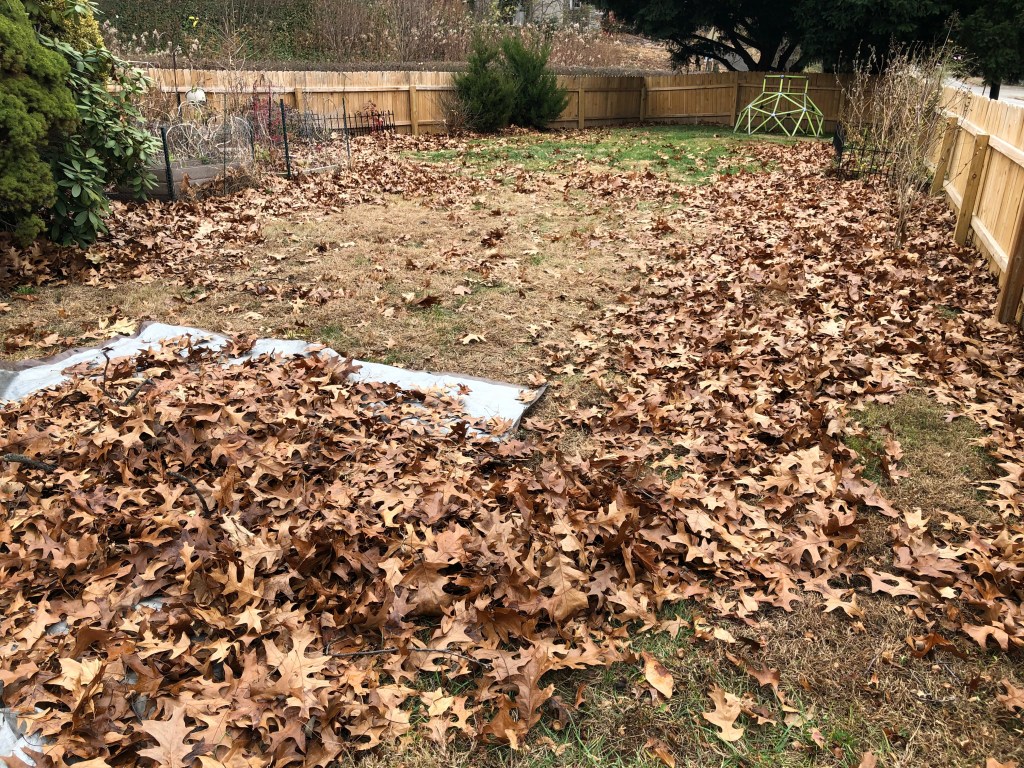
A solution to leaving leaves be is to create a leaf corral or accommodate leaves into a compost setting, either by using them in a formal bin setup or creating a wire corral where leaves can be piled. As noted, this may be an extensive project given the quantity of leaves on one’s property, however, composting leaves provide an excellent base level for composting additional organic matter, such as kitchen scraps.
Is there a middle ground in the great leaf management debate?
There is! And that is to shred leaves before applying them to beds.
What are the benefits of shredding leaves?
- In addition to providing fertilizer, as noted with leaving leaves, decomposing leaves provide a coarse medium that helps to naturally aerate soil. Moreover, decomposing leaves are very water absorbent, and a healthy layer (1-2″) or mulched leaves can facilitate water retention during drier months where bark and wood chip mulches may be insufficient.
- Many leaves contain compounds that inhibit plant growth through allelopathy. Black walnuts are a prime example, while other plants such as oaks and maples are noted for the growth-inhibiting factors of their leaves. In addition to suppressing leaves simply from laying leaves on top of beds, the chemicals found in leaves offer another weed suppression measure, reducing or eliminating the need for herbicide or weeding. Further, because leaves are used from the property, foreign materials and weed seeds are not being introduced to further weed growth.
- Light layers of leaves can be mulched directly into the lawn, providing fertilization, water retention, soil building and weed suppression effects for a naturally healthier lawn.
- The leaves will compact and won’t blow away, so you don’t have to worry about wasting your time chasing or slipping on leaves!
There are some drawbacks to shredding/mulching leaves, however.
- As with blowing leaves, extra equipment, time and energy are involved in getting leaves from one area to the next. However, many homeowners who own mowers can simply mulch leaves into a bag, applying the leaves to a bed, or mulch leaves directly into their lawns. When leaves accumulate in beds, leaves can be blown out of beds to be mulched or, handheld mulchers can be used that can directly mulch leaves to be reapplied or applied elsewhere.
- The allelopathic properties of uncomposted leaves can inhibit the germination of some seeds, a problem for homeowners who wish to directly sow ornamental or vegetable seeds into their beds.
- Many find the sight of leaves as mulch as unsightly. As in the above dilemma regarding seed inhibition, mulched leaves can be covered with a preferred ornamental mulch, organic topsoil or compost, providing a more decorative seed bed that utilizes the benefits of leaves while retaining the aesthetics and utility of more conventional mulch materials.
- Mulching leaves will expedite the breakdown of leaves but at the expense of minimizing leaf volume, slightly diminishing potential habitat for leaf-dwelling critters. However, shredded leaves can be more easily piled, whether in composting bins or as standalone piles, providing more overall leaf coverage and reducing the space needed to decompose leaves. Likewise, many other soil dwelling invertebrates, such as earthworms, spiders and pill bugs, equally benefit from the leaf cover shredded leaves provide.
If you were caught between the hassle of the removing leaves from your property and the well-intended but occasionally impractical aspects of leaving leaves where they fall, shredding/mulching leaves offers a healthy balance that blends the demands of modern living with the goals of natural gardening. Now you have a perfect excuse to get shredded come Autumn!
If you are looking for assistance with leaf shredding and bed maintenance, don’t hesitate to contact us to help you create healthy and beautiful beds for next season and beyond!
 ECOworks llc