
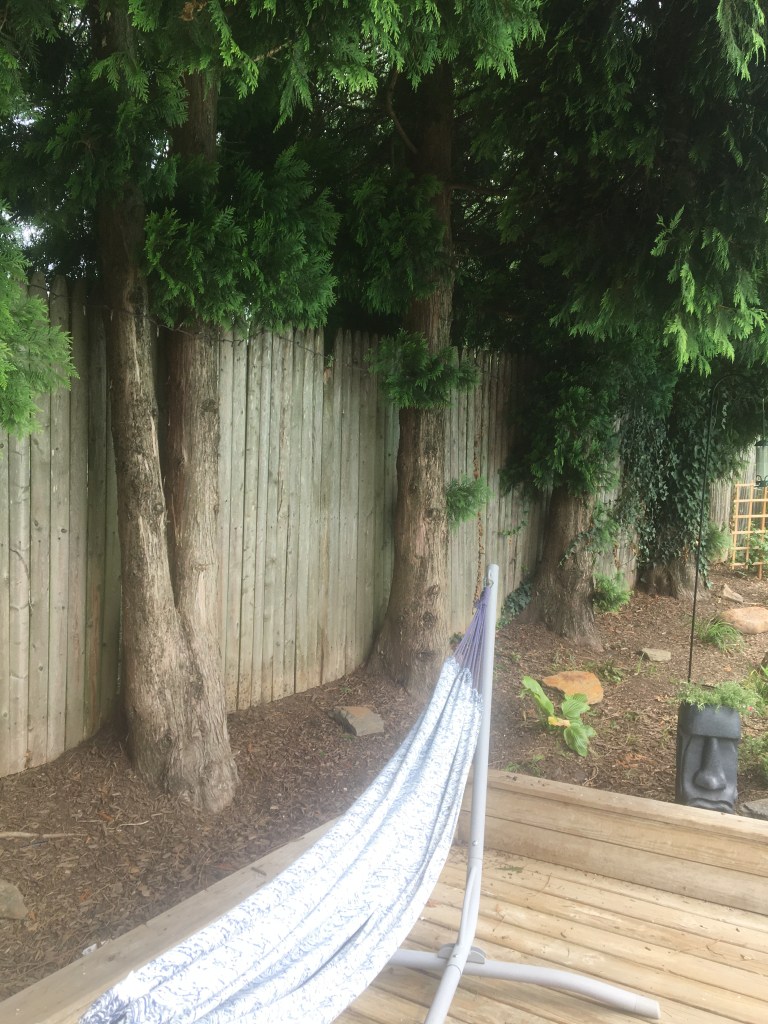
Are you sitting on the fence about whether to get a fence or a hedge? Here are some considerations before you invest in either a fence or hedge (or both!).
What are the benefits of fences or hedges?
If there is no division between properties, installing a fence or hedge may appeal to create a sense of privacy or containment. Both options have intrinsic benefits and limitations.
There are many benefits to installing a fence, particularly when compared to a hedge:
- Fences more easily contain two and four-legged creatures. Although it will depend on the size of the fence and the size of the creatures, it is difficult to maintain most hedges so that they are continuously impenetrable from the ground level and above.
- Fences are much narrower than hedges, and range from a thickness of 2-6″ depending on the type of fence and post system. In comparison, a row of pencil box shrubs (the narrowest shrub available) will occupy a width of at least 8-12″ when mature. For properties with narrow or limited lots, fences allow one to maximize the space on one’s property.
- Fences do not require pruning. For those who don’t want to invest the time and energy into pruning, there is an added expense to constantly prune shrubs
- Solid wood or vinyl fences offer continuous privacy year round. Although evergreen shrubs can be nearly impenetrable when viewed laterally, they may not grow in a nearly impenetrable manner unless they are at least 8′ tall. However, as noted, most evergreen shrubs tend to grow as wide as they are tall, so the increase in height sacrifices lot space at the border.
- The vertical dimension of a fence offers additional growing space for trellising or raised beds. The fence can also serve to prop up shelving, storage or other lawn accessories, such as sports equipment, that would get lost in the leaves of shrubs.
At the same time, hedges offer several advantages that fences do not:
- fences positioned along the edge of properties or ends of driveways are subject to any collisions that may occur (Ex. cars, tree limbs, baseballs, etc.). These collisions may simply crack a vinyl or cedar plank in a fence, or they may completely destroy a fence. While it is possible that a collision with a hedge can break some branches, once a perennial shrub is rooted, destroying any branches will simply cause the plant to send new shoots from the base. Shrubs are hard to kill!
- There is no accurate way to predict the cost of a fence, but relative to various factors, fences installed in the Philadelphia metropolitan area average roughly $33-57/ linear foot. Hedge installation costs can vary as well depending on the site, species and quantity, but generally the cost of installing hedges ranges from $10-50/ linear foot, making hedges a more affordable installation option.
- Fence lifetimes can vary from 20-30 years with vinyl fencing, to 30-40 years with cedar/pressure treated panels, to 50+ years with galvanized or wrought iron fencing. Depending on when the fence was installed, the present homeowner may need to manage replacement costs, which will include the partial or entire removal of and reinstallation of fencing. Likewise, improper setting of post footings or any additional shifts in property usage, such as drainage issues, may cause fence posts and panels to sag or shift. Some fences, including wood and metal, may need chemical treatments such as stains or paint to extend the lifetime of the fence. Although some hedge species, such as arborvitae, can have more limited lifespans of 30-50 years, most hedge plants are incredibly durable and have multiple stems so that if a part of the plant is damaged or dies, the hedge keeps growing. Unless a hedge plant is improperly sited or subject to exceptional chemical exposure, once hedges are rooted, they can last 80+ years.
- When a fence is in place, it is very difficult to adjust the position of the fence relative to the property. This can be problematic if the usage of the property changes for any reason, such as if it is re-zoned, an addition is desired, a driveway or patio needs to be extended, or the property is subdivided. While it is generally not desirable or advisable to move a 30′ arborvitae, all plants can be moved. Moreover, if a plant needs to be removed, cuttings can often be taken directly from the original plant or a replacement can be found. And if a replacement shrub is sought, they are fairly reasonable relative to the cost of a new fence!
- Solid fence panels provide privacy at the expense of air flow. This can create more humid conditions during the summer that can increase the occurrence of mildew, mold and moss growth in select settings. More importantly, stagnant air welcomes mosquito populations. Although some hedge plants, such as box shrubs, can be so dense that they substantially diminish air flow, all hedges permit air to pass through with some being more accommodating than others. By the same token, hedges are a much more cost-effective windbreak for larger properties. More importantly, taller hedges, such as arborvitae, junipers or yews, can provide shade that enhances outdoor usability during the summer while reducing indoor cooling costs.
- Some people like the look of a metal, vinyl or wood fence. Some people like having a green border at the edge of the property. While hedges may challenge the growth of adjacent plants for light and water exposure, hedges themselves can offer floral appeal (roses, azaleas, pieris) as well as edible components (aronia, blueberries, rose hips).
What if your neighbor already has a fence?
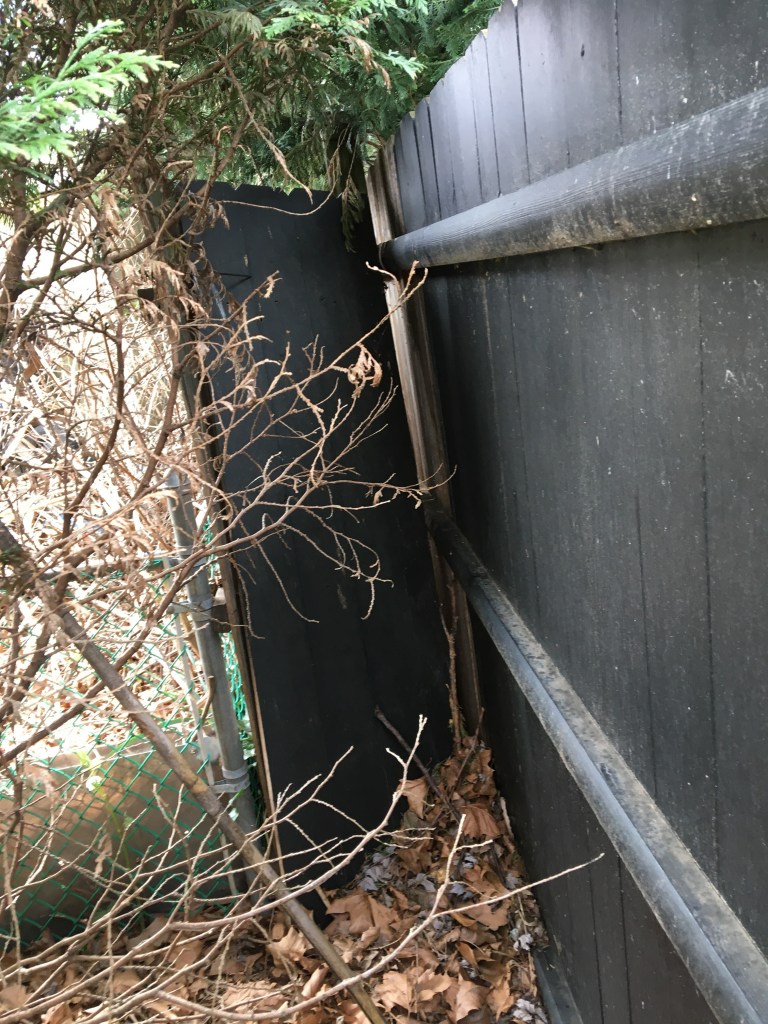
One problem I have encountered repeatedly is when a client has a fence…in front of another fence. There is often a 3-12 inch gap that is perfect for growing all of the undesired plants dispersed by wind or birds (Ex. Japanese knotweed, mugwort, pokeweed, porcelain berry, mulberries, etc.). If there is a chain link fence on your side of the property, it may be possible to pull, spray or weed-whack some weeds if the fence is low enough (<4′). However, for taller, solid fences, as pictured above, because there is no way to get between the fences, these weeds can neither be pulled nor trimmed. Most people would say “spray the weeds!” but spraying into a gap isn’t always effective. As anyone has observed when passing by sprayed weeds, they aren’t all killed in one go! The greater the foliage present, the less likely that any spray, synthetic or natural, will get rid of the weed problem.
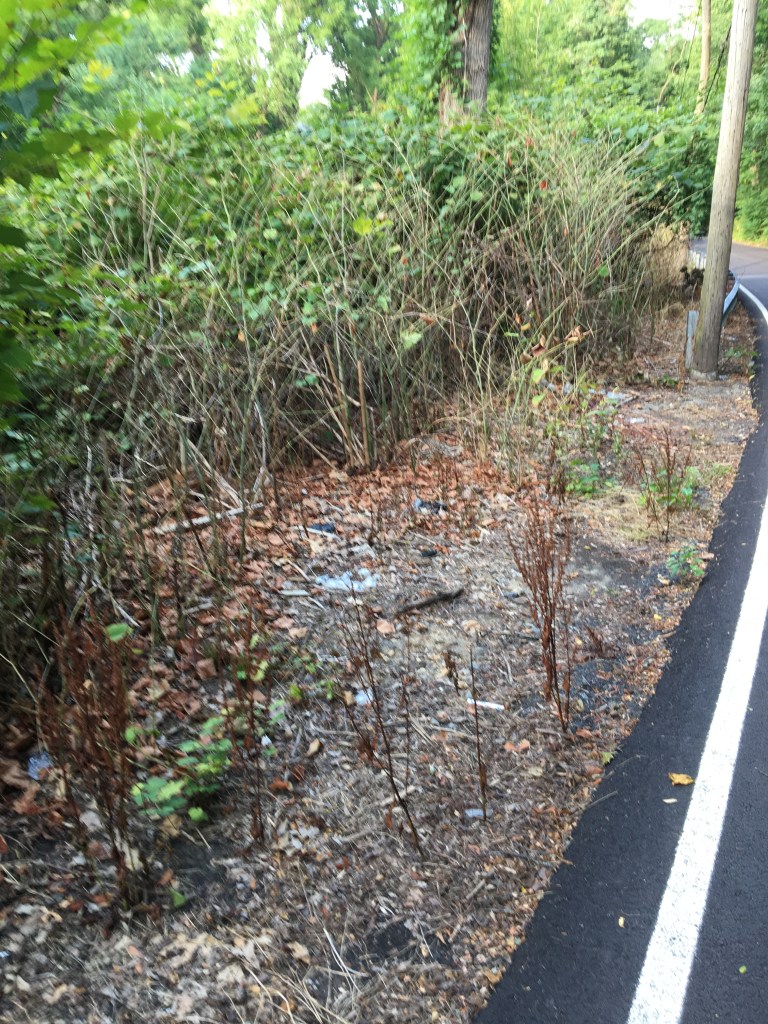
If a fence is already in place, the question remains as to how to deal with your neighbor’s fence. Some solutions:
- Paint it! Unless it’s galvanized…
- Depending on the size of a fence, install decorative trellises, pots or raised beds/planters to plant whatever your heart desires (Ex. drought tolerant ornamentals, garden plants such as tomatoes, etc.)
- Plant vining ornamentals or edible vines to trellis along the fence (Ex. native wisteria, clematis, trumpet creeper, passionfruit, roses, vining hydrangea or grapes, to name several)
- Plant a perennial border, small trees, shrubs or…hedge plants! More on that in a bit…
What if your neighbor already has hedges?
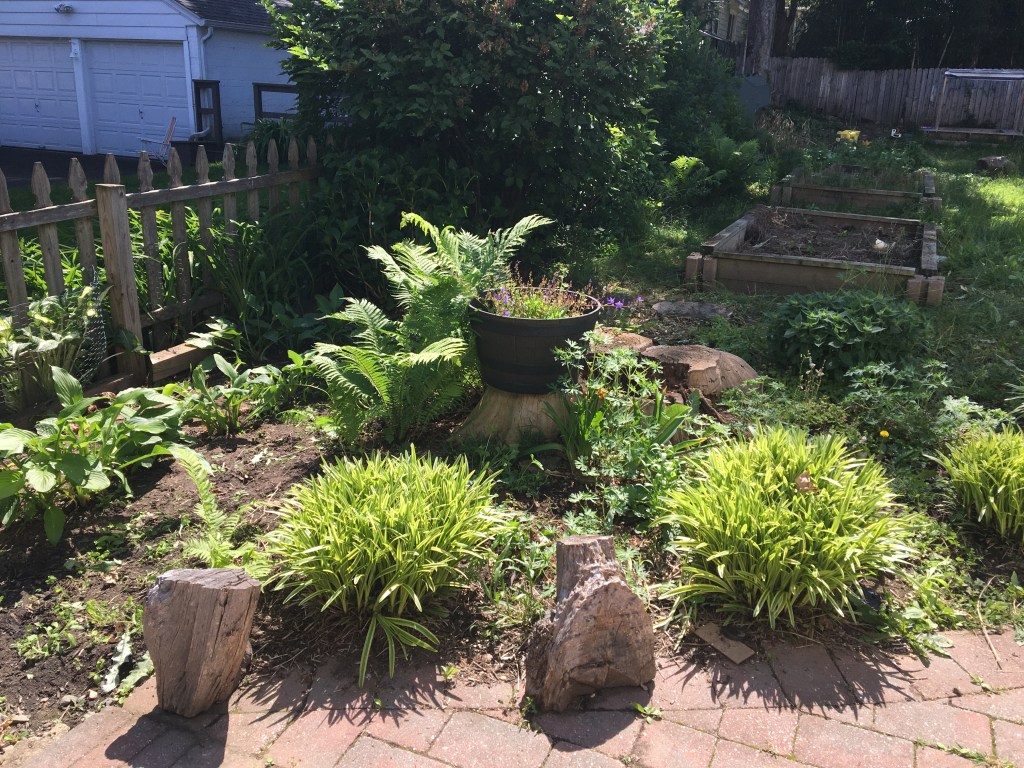
Perhaps, your neighbor already has several plants growing on the property border, such as inkberry, lilacs or forsythia. What kind of fencing should go up? All of this will depend on one’s budget and the goal of the fence. If the fence is simply to keep pets and kids contained or prevent any pedestrians from accessing between properties, and hedges are already present to obscure the appearance of the fence, a simple solution is to hammer t post garden stakes into the ground and fasten welded wire fencing at least 3′ tall to the stakes; the height will depend on how large of an animal or child you wish to contain, with coated or galvanized wire being more suited than chicken wire and equally long-lasting. Another option, as pictured above, would be to insert a wooden picket fence, which is slightly easier to install and more cost-effective initially relative to larger fences. If containing pets is the only concern and you have faith in your pooch, an invisible fence may be the best option (with really good training).
If more privacy is desired, then any solid fence is feasible. That being said, shrub growth can impact the performance of some fences, notably vinyl fences, as growing branches can push against and potentially dislodge or crack panels. You should also inform and likely acquire consent from your neighbor if you need to prune or remove branches extending into your property while ensuring that any branches that need to be pruned for fence installation will not damage the pre-existing shrubs. Otherwise, any fence can be installed alongside pre-existing shrubs as long as the installer doesn’t mind having a branch in the face…
What if you want both a fence and a hedge?
Tastefully combining a fence with a hedge can offer many benefits.
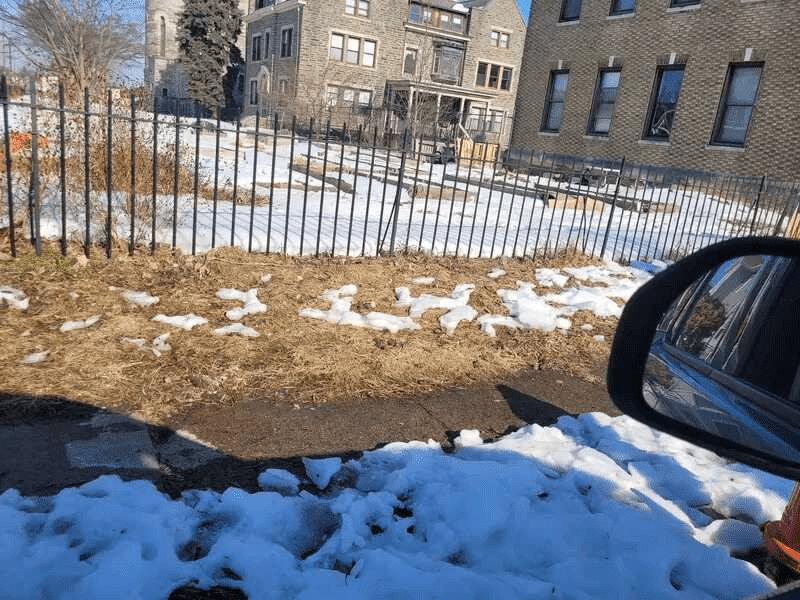
For example, a Nextdoor digital discourse arose regarding the above property on how to prevent the grass in front the fence from continuing to serve as a pet latrine at minimal expense. Shorter fences are, needless to say, more cost effective than larger fences. However, shorter fences will not provide privacy, and any fence not installed directly on the property edge will create unused space that needs to be maintained or may be subject to the whims of passersby (Ex. litter and poop). While some may recommend adding an additional fence, adding hedges can dress up the pre-existing fence while reducing (most) undesirable behavior.
In the above case where property extending outside of a metal fence was subject to dog excrement and other debris, installing smaller hedges with a diameter < 3′ can deter pets and people from accessing the space. For example, thorny plants and plants with sharper leaves/branches such as Rhus aromatica, roses, barberries, junipers, azaleas and box shrubs can all impede access to the space, preventing pets from leaving their business behind (when pet-owners condone otherwise…). Likewise, if privacy or a more aesthetic approach is desired, taller and narrower shrubs, such as gooseberry, sweet spire, privets, mock orange, rose of sharon, crape myrtle, pussy willow or even service berries can provide a colorful and manageable alternative.
Planting hedges in front of fences can be done for taller fences as well. It depends on what purpose you wish to accomplish. If one is seeking shade, then arborvitae and some species of juniper are a popular choice. To simply dress up a fence, a variety of hedges can serve that purpose depending on whether one enjoys evergreen (Ex. false cypress, inkberry, nandina, pieris) or deciduous plants (Ex. abelia, forsythia, witch hazel, beauty berry). Many native plants are also suckering and can quickly fill a hedgerow, such as sweetshrub, sweet spire and gooseberry. As noted previously, fences can also serve as a backdrop and allow homeowners to pursue more intricate growing methods, such as trellising edible plants, such as blueberries, blackberries, raspberries and currants, or even espaliered apples, pears or other stone fruits. There are many ways to incorporate hedges and fences!
Considerations for combining hedges and fences
When combining hedges and fences, especially solid paneled fencing, shrubs will grow differently depending on light exposure. If a solid paneled fence reduces light exposure, it may cause a shrub to grow taller and “leggier”, exposing more branches at the bottom. This may be unsightly for some and may potentially cause the shrub to lean more. This can be a common occurrence for shrubs with more flexible shoots, such as privets, rose of sharon and forsythia. Plants grown with less sunlight (<4 hrs) are more likely to lean anyway, so when a fence is on the other side, branches may extend further in the opposite direction and obstruct pedestrians or vehicles. In such instances, hedges may not be the best plant option to “dress up” a fence as constant pruning may be needed.
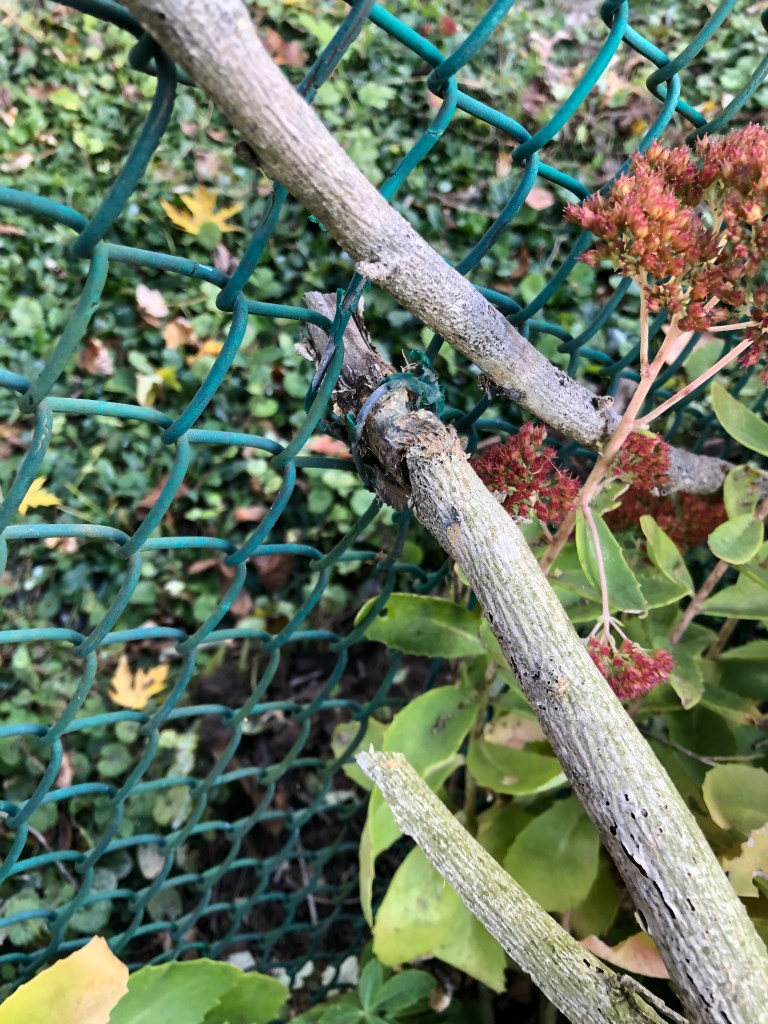
Another challenge of combining fences with hedges and other plants is that, as pictured above, some plants may growth through the fence, especially if the fence is not solid, such as chain link. Plants that grow through the fence may become entangled, potentially injuring the tree/shrub and damaging the fence. Another factor impacting hedges, with or without a fence, is regarding the pre-existing vegetation. Trees growing on the other side of a fence will obviously cast shade, but this shade may affect plants differently along the fence and throughout the day; some plants may not tolerate shade well, while shade lovers may get scorched if shade isn’t equally distributed. Finally, both hedges and fences can create challenges because as they grow, birds and squirrels will plant seeds nearby. When a hedge is in front of a fence, tree seedlings will grow within hedges (and through pre-existing fences)! Although one cannot predict where and which plants will germinate, mulberries, maples, cherries, sweet gum and oaks, amid various invasive plants, are known to appear in hedges such as yews, azaleas and box shrubs. For some this is a nuisance, for others part of the property maintenance and for others another opportunity to observe nature at work!
Getting you off the fence…
Deciding between installing a fence or a hedge incorporates many factors, and there are many considerations that influence incorporating hedges into a landscape especially if there is already a pre-existing fence. If you are interested in sustainable landscaping in the Philadelphia metropolitan area and looking to dress up a fence or install a hedgerow, please contact ECOworks so we can help you live life on the hEDGE!
 ECOworks llc